Is your target really outside sensitive sectors in France — or simply not identified yet?
⸻
Sensitive sectors in France are not defined solely through a fixed regulatory list, but through a combination of legal classifications and strategic interpretations by public authorities.
In practice, sensitive sectors in France extend beyond formal definitions, as authorities assess not only the activity itself, but also its strategic implications within national interests.
This means that a transaction may fall within sensitive sectors in France even when the target’s activities are not immediately identified as critical from a purely regulatory perspective.
The French State does not only define sensitive sectors in France through legal provisions, but evaluates the strategic value of assets, technologies, data and capabilities involved in each transaction.
As a result, identifying exposure to sensitive sectors in France requires more than a compliance check and often involves anticipating how authorities may interpret the transaction in context.
⸻
What you need to know
• Sensitive sectors in France are defined by regulation but interpreted dynamically by the administration
• Activities may fall within sensitive sectors in France based on their use, not only their classification
• Indirect exposure can bring a company within sensitive sectors in France
• The perimeter of sensitive sectors in France has expanded significantly in recent years
• Qualification within sensitive sectors in France directly impacts approval probability and execution risk
⸻
What are considered sensitive sectors in France
Sensitive sectors in France are identified by regulation due to their connection with national security, public order and strategic autonomy.
These sensitive sectors in France typically include:
• defense and military-related activities, including supply chains and critical subcontractors
• dual-use technologies with both civilian and military applications
• cybersecurity, encryption technologies and critical digital infrastructure
• artificial intelligence, advanced computing and data processing capabilities
• energy production, distribution and storage infrastructure
• transport and telecommunications networks considered essential to national continuity
• activities involving sensitive data, including health, identity or strategic datasets
However, this regulatory perimeter is only a starting point. For a detailed sector-by-sector breakdown, see our full overview of sensitive sectors in France.
⸻
Why sensitive sectors in France are broader in practice
In practice, sensitive sectors in France are interpreted through a strategic lens that goes beyond formal classification and reflects the role of the target within critical ecosystems.
Authorities may consider that a company falls within sensitive sectors in France if it contributes to a critical value chain, provides access to strategic data or enables control over key technological capabilities.
As a result, sensitive sectors in France include not only explicitly regulated activities, but also those that create indirect strategic dependencies or vulnerabilities.
This broader interpretation means that sensitive sectors in France must be assessed in light of how the State perceives long-term industrial, technological and sovereignty implications.
⸻
Grey areas and hidden exposure
One of the main challenges for investors lies in identifying grey areas within sensitive sectors in France, where the level of sensitivity is not immediately apparent.
These situations often arise when companies operate at the intersection of regulated and non-regulated activities, or when their strategic role is not immediately visible.
• companies providing components or services to defense or critical infrastructure operators
• technology firms with potential dual-use applications not yet fully classified
• businesses holding large volumes of strategic or personal data
• companies embedded in supply chains essential to national resilience
Failure to identify these grey areas within sensitive sectors in France early in the transaction process can significantly increase execution risk and regulatory exposure.
⸻
Strategic insight: sensitivity is assessed, not declared
A defining characteristic of sensitive sectors in France is that their qualification is not solely based on legal definitions, but on how authorities assess the strategic implications of a transaction.
This means that two transactions involving activities within sensitive sectors in France may be treated differently depending on the investor profile, geopolitical context and perceived risks.
As a result, sensitive sectors in France cannot be approached as a binary classification, but must be understood as a strategic assessment directly influencing approval outcomes.
⸻
Impact on transaction execution
Exposure to sensitive sectors in France has direct consequences on the feasibility, structuring and timing of a transaction subject to FDI screening.
• mandatory prior authorization before completion of the transaction
• increased likelihood of conditions affecting governance, operations or control
• extended timelines due to regulatory scrutiny of sensitive sectors in France
• heightened political and institutional visibility
These factors must be integrated into transaction strategy at an early stage to preserve deal certainty and avoid late-stage constraints.
⸻
Evaluate whether your target falls within sensitive sectors in France — before structuring the transaction
Many transactions encounter difficulties because exposure to sensitive sectors in France is identified too late, when structuring options and negotiation leverage are already constrained.
An early-stage assessment allows investors to anticipate how sensitive sectors in France will be interpreted, adapt transaction design and reduce execution risk before engaging with authorities.
Assess approval risk

⸻
Relians — Strategic advisory on sensitive sectors in France
Relians advises investors, companies and their advisors on the identification and strategic assessment of sensitive sectors in France within the framework of FDI screening.
We support transactions where exposure to sensitive sectors in France directly impacts regulatory qualification, deal feasibility and interaction with public authorities.
Our approach focuses on:
• identifying explicit and implicit exposure to sensitive sectors in France
• analyzing how activities may be interpreted by the administration
• anticipating regulatory qualification within sensitive sectors in France
• positioning the transaction in light of State expectations
• supporting interactions with authorities throughout the review process
Contact us

⸻
Expert insight
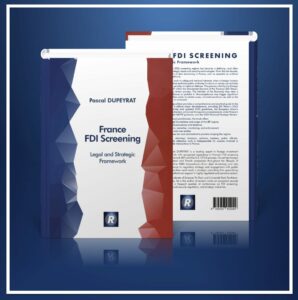
A detailed analysis of sensitive sectors in France and their interpretation within the French FDI regime is further developed in France FDI Screening: Legal and Strategic Framework, which provides a comprehensive perspective on strategic regulatory assessment.
⸻
FAQ — Sensitive sectors in France
What qualifies as sensitive sectors in France?
Sensitive sectors in France include defense, dual-use technologies, cybersecurity, artificial intelligence, energy, critical infrastructure and activities involving strategic data.
official guidance from the French Ministry of Economy
Can a non-sensitive company fall within sensitive sectors in France?
Yes. A company may fall within sensitive sectors in France if its activities have indirect strategic implications or are part of a critical value chain.
Are sensitive sectors in France clearly defined by law?
Sensitive sectors in France are defined by regulation, but their interpretation depends on how authorities assess strategic impact and national interest considerations.
How can investors assess exposure to sensitive sectors in France?
Assessing exposure to sensitive sectors in France requires a combined legal and strategic analysis of the target’s activities, ecosystem and role within critical industries.
⸻
“Sensitive sectors in France are never defined in isolation — they emerge from how the State evaluates control, influence and strategic impact on national interests.”