
What Sanctions Apply for Non-Compliance with Foreign Investment Screening in France?
⸻
Foreign direct investment plays an important role in the development of the French economy. International investors frequently acquire stakes in French companies, particularly in sectors such as technology, infrastructure, energy, defense, and telecommunications.
However, certain investments may raise concerns related to national security, public order, or the protection of critical technologies. To address these risks, France has implemented a regulatory framework known as the foreign investment screening regime.
This framework allows the French government to review certain transactions involving foreign investors when the target company operates in sensitive sectors. The purpose is not to restrict international investment but to ensure that strategic national interests remain protected.
When investors fail to comply with these regulatory requirements, they may face sanctions under the foreign investment screening France regime.
Understanding these potential sanctions is therefore essential for investors, financial advisors, and companies involved in cross-border acquisitions.

⸻
What Is the Legal Basis for Foreign Investment Screening in France?
The legal framework governing foreign investment screening in France is primarily based on the Monetary and Financial Code, particularly Article L.151-3 and its implementing regulations.
Under this framework, certain transactions involving foreign investors require prior authorization from the French Ministry of the Economy before they can be completed.
This authorization requirement generally applies when the target company operates in sectors considered sensitive for national interests.
These sectors include activities related to:
• defense and national security
• critical infrastructure
• cybersecurity and digital technologies
• telecommunications
• energy and water supply
• transport networks
• sensitive data processing
• advanced technologies such as artificial intelligence or robotics
When a transaction falls within the scope of this regime, the investor must obtain approval before completing the acquisition. Failure to do so may lead to sanctions under the foreign investment screening France regime.
⸻
When Can Sanctions Be Imposed Under Foreign Investment Screening in France?
Sanctions may arise in several situations where the regulatory framework has not been respected.
The most common situation occurs when a foreign investor completes an acquisition without obtaining the required authorization from the Ministry of the Economy.
This situation represents a direct breach of the foreign investment screening rules.
Another situation that may lead to sanctions occurs when the investor receives authorization but fails to comply with the conditions attached to that approval.
In many cases, the French authorities grant authorization subject to commitments designed to protect national interests. These commitments may involve obligations such as maintaining certain activities in France, protecting strategic technologies, or ensuring the security of sensitive data.
Sanctions may also arise when investors provide incomplete or inaccurate information during the regulatory review process.
In all these cases, the authorities may impose sanctions under foreign investment screening France rules.
⸻
What Administrative Measures Can the French Authorities Impose?
Before imposing financial penalties, the French authorities often attempt to restore compliance through administrative measures.
The Ministry of the Economy has the power to issue injunctions requiring the investor to comply with the regulatory framework.
These administrative measures may include:
• requiring the investor to submit a formal authorization request
• suspending voting rights associated with the investment
• requiring modifications to the transaction structure
• imposing operational safeguards designed to protect sensitive activities
These measures aim to ensure that the investment complies with the legal framework governing foreign investment screening.
However, if the investor fails to comply with these measures or if the violation is particularly serious, the authorities may impose sanctions foreign investment screening France enforcement powers allow.
⸻
What Financial Penalties Can Be Imposed?
Financial penalties represent one of the most significant enforcement mechanisms available to the French authorities.
Under the Monetary and Financial Code, the Ministry of the Economy may impose substantial fines on investors who violate the foreign investment screening regime.
The amount of the fine may depend on several factors, including the value of the investment and the seriousness of the breach.
Financial penalties may reach the highest of the following thresholds:
• up to twice the value of the unlawful investment
• up to 10 percent of the annual turnover of the target company
• a fixed financial penalty that may reach several million euros
These financial penalties demonstrate the seriousness of sanctions foreign investment screening France authorities may impose.
Beyond the financial consequences, such penalties may also have reputational effects for investors involved in international transactions.
⸻
Can the French Government Force an Investor to Sell Its Investment?
Yes. In certain situations, the French authorities may impose structural remedies designed to eliminate the risks associated with the investment.
Such remedies may include requiring the investor to reduce its participation in the company or to modify the structure of the transaction.
In the most severe cases, the authorities may order the investor to divest the investment entirely.
These divestment orders represent one of the most powerful sanctions foreign investment screening France authorities can enforce, because they directly affect the ownership structure of the target company.
These measures are typically used when the authorities consider that the investment poses a serious threat to national security or when the investor refuses to comply with the commitments imposed during the authorization process.
⸻
How Do Sanctions Affect Cross-Border Transactions in France?
The existence of sanctions within the foreign investment screening regime has significantly changed how cross-border transactions are structured in France.
Investors, banks, and legal advisors now systematically analyze foreign investment screening risks before launching acquisitions involving French companies.
The possibility of sanctions foreign investment screening France enforcement actions has encouraged investors to conduct detailed regulatory due diligence before signing a transaction.
Foreign investment screening may also influence the transaction timeline, since the authorization process can take several weeks or months depending on the complexity of the case.
As a result, regulatory analysis has become an integral part of transaction planning.
⸻
How Can Investors Avoid Sanctions?
The most effective way to avoid sanctions is to anticipate foreign investment screening issues at the earliest stage of the transaction.
Investors should first determine whether the target company operates in sectors covered by the foreign investment screening regime.
They should also analyze whether the structure of the transaction triggers the legal thresholds that require prior authorization.
Early regulatory analysis allows investors to structure their transaction appropriately and to initiate the authorization process before closing the deal.
By anticipating regulatory requirements, investors can significantly reduce the risk of facing sanctions foreign investment screening France enforcement authorities may impose.
⸻
What Happens if a Foreign Investor Fails to Obtain Approval in France?
If an investor completes a transaction without obtaining the required authorization, the French authorities may impose sanctions under the foreign investment screening France regime.
These sanctions may include administrative injunctions, financial penalties, and in some cases structural remedies designed to eliminate the risks created by the investment.
⸻
Can the French Government Cancel an Investment?
Yes. In severe cases, the French authorities may require investors to modify the transaction or divest their participation in the target company.
Such decisions are typically adopted when the investment is considered to pose a serious risk to national security or public order.
⸻
Are Financial Penalties Significant?
Financial penalties may be substantial. The Ministry of the Economy has the authority to impose fines that may reach millions of euros depending on the value of the investment and the seriousness of the violation.
⸻
Which Authority Enforces Foreign Investment Screening in France?
Foreign investment screening in France is administered by the French Ministry of the Economy, which reviews transactions and ensures compliance with the regulatory framework.
⸻
How Can Investors Assess Their Transaction Risk?
Before completing a cross-border acquisition in France, investors should determine whether the transaction may fall within the scope of foreign investment screening.
Relians provides strategic advisory services to help investors anticipate regulatory risks associated with foreign investment screening in France.

⸻
Further reading
For a detailed analysis of the French foreign investment screening regime, see:
France FDI Screening: Legal and Strategic Framework (English Edition)
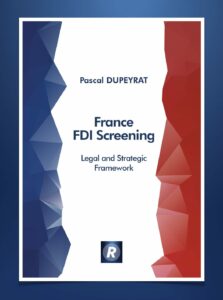
Author: Pascal DUPEYRAT
Publisher: Relians
Edition: English Edition — 1st edition
Print ISBN-13: 978-2-9584520-4-9
Ebook ISBN: 978-2-9584520-6-3
⸻
Relians supports international investors investing in France and managing foreign investment screening risk.