Do You Need Approval for Foreign Investment in France?
Foreign investors are increasingly active in the French economy. France remains one of Europe’s largest destinations for international capital, offering access to a highly developed industrial base, world-class research institutions, and a large consumer market. However, like many advanced economies, France operates a regulatory mechanism designed to protect national security and strategic sectors. As a result, certain transactions require foreign investment approval France before they can be completed.
For investors, understanding when foreign investment approval France is required is essential. Transactions that fall within the scope of the regime must receive prior authorization from the French Ministry of the Economy. Failure to obtain the appropriate foreign investment approval France can lead to serious consequences, including suspension of the transaction, financial penalties, or orders to unwind the investment.
This guide provides a practical overview of the French foreign investment control framework and helps investors determine whether their transaction may require foreign investment approval in France.
⸻
The French Foreign Investment Screening Framework
France has implemented a structured regulatory regime designed to monitor certain foreign investments. The system is built primarily on the provisions of the French Monetary and Financial Code, particularly Article L.151-3 and related regulatory texts.
Under this framework, certain investments by foreign entities must receive prior authorization from the Ministry of the Economy. In practical terms, this means that investors must assess whether their transaction could fall within the scope of the regime before completing the deal. If it does, they must file a request for foreign investment approval France.
The review process is managed by the French Treasury within the Ministry of the Economy. The administration examines whether the transaction could affect public order, public security, national defense interests, or the integrity of strategic economic sectors. If the authorities determine that the investment raises concerns, they may impose conditions, request additional commitments from the investor, or in rare cases refuse foreign investment approval France altogether.
For international investors, the key challenge is therefore identifying early in the transaction process whether foreign investment approval France might be required.
⸻
When Does Foreign Investment Require Approval in France?
The French regime is based on three cumulative criteria. An investment will fall within the scope of the review mechanism when all three conditions are satisfied.
1. The Investor Is Foreign
The first condition concerns the identity of the investor. The regime applies when the investor is considered foreign under French law. This includes non-French individuals as well as companies controlled from outside France.
In practice, the nationality of the investor, the location of its headquarters, and the structure of its ownership may all be relevant factors. Even a company incorporated in France or within the European Union may be treated as foreign if it is controlled by a non-French entity. When such an investor acquires a strategic business in France, the transaction may require foreign investment approval France.
2. The Transaction Qualifies as an Investment
The second criterion relates to the nature of the transaction. Not every commercial relationship or contractual arrangement qualifies as an investment under the French regulatory framework.
Typically, the regime applies to transactions involving:
• the acquisition of control over a French company
• the acquisition of significant shareholdings in certain cases
• the purchase of assets or business activities located in France.
If the transaction involves any of these forms of investment, it may trigger the requirement to obtain foreign investment approval France, depending on the sector involved.
3. The Target Operates in a Sensitive Sector
The third and most important criterion concerns the activities of the target company. Only investments affecting certain sectors of strategic importance fall within the scope of the French screening regime.
These sectors include areas considered critical for national security, technological sovereignty, or public safety. When a foreign investor seeks to acquire a company operating in one of these sectors, the authorities may require foreign investment approval France before the transaction can proceed.
Sensitive Sectors Under French Law
France maintains a broad list of sectors considered sensitive from a national security perspective. Investors should carefully assess whether the target company operates in any of these areas.
Sensitive activities include, for example:
• defense and military technologies
• dual-use goods and technologies
• cybersecurity and information systems security
• cryptology and secure communications technologies
• sensitive data processing and storage
• critical infrastructure such as energy, water, transport and telecommunications.
In addition to traditional security sectors, France has progressively expanded the scope of its review regime to include advanced technologies. These now include fields such as artificial intelligence, semiconductors, quantum technologies, robotics, and certain biotechnology applications.
Investments involving these activities are more likely to require foreign investment approval France, particularly when the target company possesses critical technologies or plays a key role in industrial supply chains.
⸻
How the Approval Process Works
When a transaction falls within the scope of the regime, investors must submit a request for authorization to the French Ministry of the Economy. The authorities then review the proposed investment to determine whether it may affect national interests.
The review process generally unfolds in two stages.
During the initial review phase, the authorities conduct a preliminary assessment of the transaction. If the investment does not raise concerns, the administration may grant foreign investment approval France relatively quickly.
If the transaction involves sensitive technologies or strategic infrastructure, the authorities may open a more detailed review phase. During this stage, they may request additional information from the investor or negotiate commitments designed to protect national interests.
These commitments may include restrictions on access to sensitive data, security clearances for certain personnel, or the maintenance of specific activities within France. Once these conditions are agreed upon, the authorities may grant foreign investment approval France, allowing the transaction to proceed.
⸻
Assessing Regulatory Risk Before a Transaction
For investors, the main challenge is identifying regulatory risks early in the transaction process. Waiting until the final stages of a deal to assess whether foreign investment approval France is required can create delays and uncertainty.
As a result, many investors now conduct a regulatory screening analysis before signing a transaction. This preliminary assessment allows them to determine:
• whether the investor qualifies as foreign under French law
• whether the transaction constitutes an investment within the meaning of the regime
• whether the target company operates in sensitive sectors.
Understanding these factors early helps investors structure transactions more effectively and anticipate any regulatory obligations, including the need to obtain foreign investment approval France.
⸻
Learn More About the French Foreign Investment Regime
For a comprehensive analysis of the legal and strategic framework governing foreign investment in France, investors may consult the reference book:
-
Title: France FDI Screening: Legal and Strategic Framework (English Edition)
-
Language: English
-
Author: Pascal DUPEYRAT
-
Publisher / Imprint: Relians
-
Edition: English Edition — 1st edition
-
Print ISBN-13: 978-2-9584520-4-9 (9782958452049) – Barns&Noble
- Ebook ISBN: 978-2-9584520-6-3 (9782958452063) – Booktopia – Lehmans – Hugendubel – RakutenKobo – OrellFüssli –
-
Distributor: IngramSpark
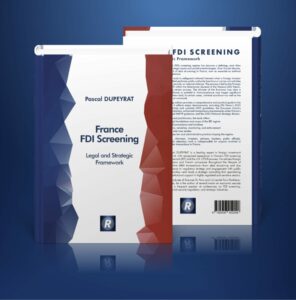
The book provides a detailed explanation of the French foreign investment review regime, including the legal foundations of the system, the scope of sensitive sectors, and practical guidance for investors and advisors.
Understanding the regulatory environment is a key step for any investor considering a transaction in France. By identifying early whether foreign investment approval France may be required, investors can better anticipate regulatory expectations and secure the successful completion of their investment projects.